

Empathy is a social skill allowing us to recognize, and understand what others may be feeling and thinking. It's the ability to view the world through another person's eyes. . Like other emotional intelligence skills, it can be taught and developed. Today, take a moment with your child and try out one of these empathy-building ideas. . Drawing: DeenaMargolin #empathy #socialskills #emotionalintelligence #eiskills #emotionalintelligenceforkids #emotionalmastery #parenting #kidseducation

In our world full of feelings, these quotes guide us to understand others better and share their perspective. Empathy Quotes

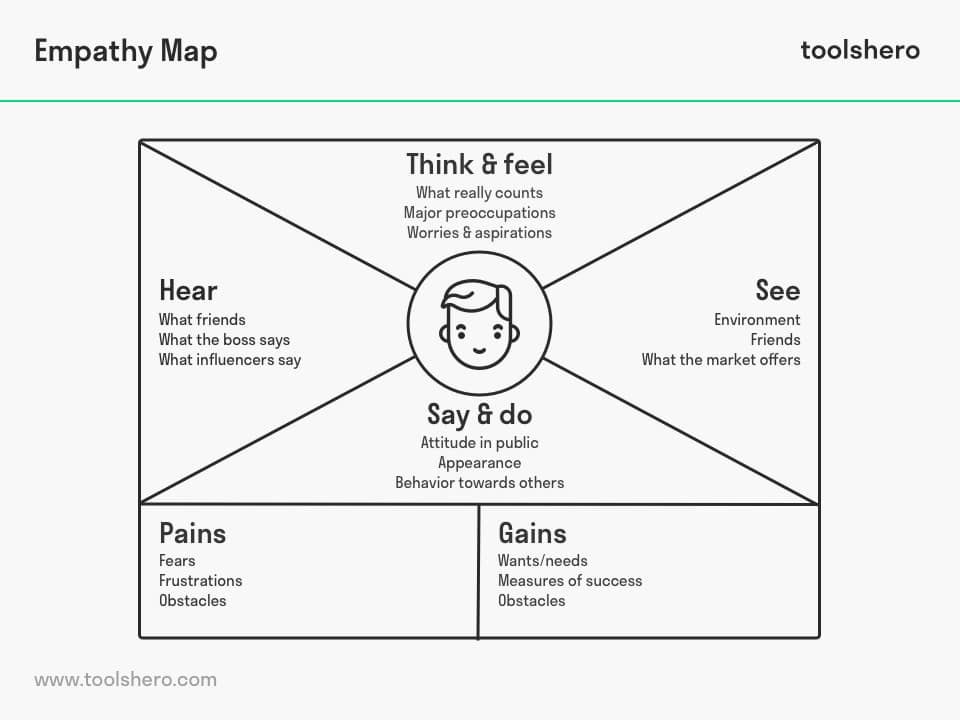
Empathy is a critical skill for kids to develop and one of the hallmarks of emotional healing as detailed in the Grand Feelings Exit Plan (Signs of Emotional Health). The Empathy Map is a great way to get kids thinking about and understanding empathy for others. It is adapted from a business setting where it is used to understand clients but works great with kids.Here's What You Need A large sheet of paper or a board. Markers. Sticky notes. Pen/PencilHere's How To Set Up the Empathy Map (as shown above) Title the page 'Empathy Map.' Underneath the title write the word 'Issue' Draw a large box taking up the page underneath. In the middle of the box, draw a face or a picture of a person. Draw a large circle around the person leaving pace between the circle and the box as well as the circle and the drawing of the face/person. Draw six straight(ish) lines out from the picture in the middle of the circle to the box leaving six spaces inside and outside the circle. Label the six spaces (either inside or outside the circle) as follows: Hearing, Thinking, Seeing, Saying, Doing and Feeling. Label the area inside the circle 'Our Expectations' and outside the circle 'Reality.'How to Use the Empathy Map Start by determining the situation or issue. Write it on a post-it note and stick it next to the word issue. The issue can be something the young person is currently going through or a hypothetical situation. In this instance, our issue for the map show was 'My best friend yelled at me and called me a jerk!' Starting on the inside of the circle, use post-it notes to identify what we might hear, think, see, say and do when faced for the issue. In this example, we heard 'Mean words,' 'Rumors' and a bad tone. We felt 'Anger,' 'Resentment' and 'Jealousy.' We could react saying things like 'Go Away' or a 'I hate you.' In this part of the exercise, the point it to identify actual thoughts, actions and feelings (expressed or unexpressed). There are no right answers and we are not searching for how we should respond. Once the inside of the circle is done, work through the outside going through each of the six sections again and focusing on what the person identified in the issue might be hearing, thinking, seeing, saying, doing and feeling. In this example, we wondered if maybe our friend was hearing her 'Dad yell at her' and taking that out on us. Perhaps she was feeling 'Emptiness' or 'Hurt.' perhaps what she is trying to say is 'Can someone listen to me,' 'Please talk to me,' or 'Please love me.' As you talk through the items on the outside of the circle, ask the child(ren) how thinking about what the person is going through or experiencing changes their outlook on the situation and how it might change how they react.

#Empathy #MentalHealth

Means taking a look at life from the other persons perspectiveto influence your thoughts judgements towords greater connection. visit our website to learn more about our courses.

Upper elementary blog with practical, rigorous, classroom tested ideas to implement with your students.

Skillabilly shares the personal development skills that can transform your life. Learn how to master any skill to optimize your potential.

I got a tattoo of the empathy symbol with Brené Brown’s quote on empathy and shame.

Instant empathy worksheets PDF activity book to teach kids or students all about empathy and being kind to others.

Free printable character education worksheets for elementary school age children. Teach good traits with quality worksheets about honesty, respect, conscience and more. Character building lessons are easier with our free printable character education worksheets.

Find a definition of empathy for kids, with examples of empathy, why empathy is important, and links to teaching resources about what empathy is.

This educational worksheet introduces students to the concept of “Practicing Empathy,” highlighting it as an essential skill that enhances human interaction and can be developed like a muscle with exercise. It emphasizes that empathy is more than just understanding another person’s emotions; it involves active participation in another’s experience, fostering deeper connections and more meaningful...


What is it? An empathy map is a collaborative tool used to develop insight into customers, users, etc.. It is often a starting point for…

We want to create an environment in our classroom that encourages and teaches empathy. Children tend to be egocentric and need to be expli...

Start empathy mapping with customers and users today––a great human-centered design (HCD) tool! Also useful for UX research and experience design projects. Download your free Empathy Map template today.

#vocabulary from confusedwords.org

Empathy definition poster for the classroom.

There are fun ways to teach empathy in a classroom setting. We have some practical ideas to try in a 1st or 2nd grade classroom.
