

Always try to avoid scratches and bites from animals as zoonotic diseases are often caught from the bites and scratches from animals. #WorldZoonosesDay #SafetyPrecautions #KidsRKidsSchool #Chandigarh

More than 60% of human infectious diseases are caused by pathogens shared with wild or domestic animals. Zoonotic disease organisms include those that…

Mapping the interface of poverty, emerging markets and zoonoses - Download as a PDF or view online for free

Buy Zoonoses: Infectious Diseases Transmissible from Animals to Humans (ASM Books) 4 by Bauerfeind, Rolf, von Graevenitz, Alexander, Kimmig, Peter, Schiefer, Hans Gerd, Schwarz, Tino, Slenczka, Werner, Zahner, Horst (ISBN: 9781555819255) from Amazon's Book Store. Everyday low prices and free delivery on eligible orders.

A systematic review of zoonoses transmission and livestock/wildlife interactions: Preliminary findings - Download as a PDF or view online for free

Découvrez comment prévenir, diagnostiquer et traiter les parasites affectant vos chiens et chats, tout en protégeant votre famille

Owning a dog has many mental and health benefits. However, people often don’t realize that dogs are a potential source of pathogens that can be transmitted to humans These diseases are called zoonoses.

Population fluctuations are widespread across the animal kingdom, especially in the order Rodentia, which includes many globally important reservoir species for zoonotic pathogens. The implications of these fluctuations for zoonotic spillover remain poorly understood. Here, we report a global empirical analysis of data describing the linkages between habitat use, population fluctuations and zoonotic reservoir status in rodents. Our quantitative synthesis is based on data collated from papers and databases. We show that the magnitude of population fluctuations combined with species’ synanthropy and degree of human exploitation together distinguish most rodent reservoirs at a global scale, a result that was consistent across all pathogen types and pathogen transmission modes. Our spatial analyses identified hotspots of high transmission risk, including regions where reservoir species dominate the rodent community. Beyond rodents, these generalities inform our understanding of how natural and anthropogenic factors interact to increase the risk of zoonotic spillover in a rapidly changing world. Many rodent species are known as hosts of zoonotic pathogens, but the ecological conditions that trigger spillover are not well-understood. Here, the authors show that population fluctuations and association with human-dominated habitats explain the zoonotic reservoir status of rodents globally.

Ciclo de Vida da Leishmania sp. - Transferir como PDF ou ver online gratuitamente
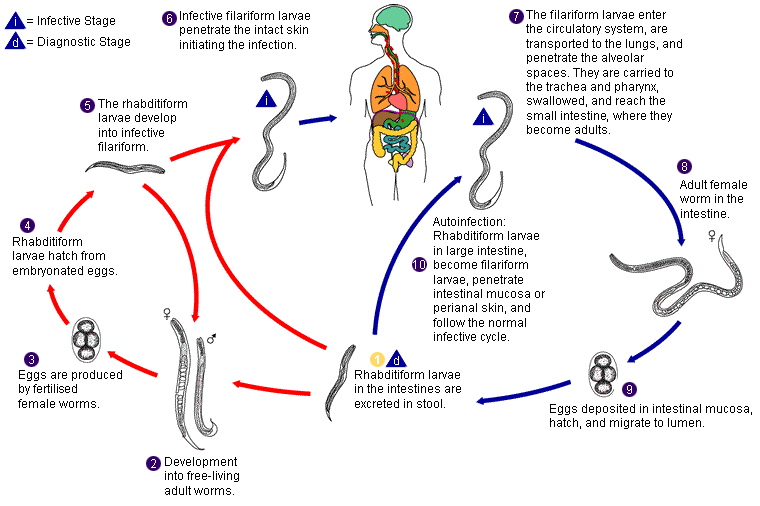
Strongyloides stercoralis Life cycle- CDC

I investigate how human encroachment on wildlife species leads to transfer of diseases between wildlife and people (zoonoses) and people and wildlife (reverse…

O Centro de Controle de Zoonoses (CCZ) da Secretaria de Saúde da Prefeitura de São Caetano do Sul promove no dia 30 de janeiro (sábad...

Our local library recently hosted a talk by a retired microbiology professor, Shan De Liu. He has worked on, among other things, zoonoses, particularly the botfly. If you don't know what that is, check out its grossness (and fascinating facts) here. Professor Liu's grandmother sent his uncle into the interior of China to buy herbs…

GOODB Honey is a #natural powerhouse that helps prevent #diseases in several ways. Packed with essential nutrients like #vitamin C, #phytonutrients, and #prebiotics, honey strengthens our #immune system, keeping illnesses at bay. Its anti-microbial properties further assist in fighting off harmful bacteria and infections, making honey an excellent addition to a #healthy #lifestyle. WORLD ZOONOSES DAY. #GOODB #GOODBFOODS

The term “miniature pig” is used to describe a variety of smaller pig breeds as well as crossbreeds. There are at least 14 recognized breeds of miniature pigs, including the Vietnamese potbellied pig, the Juliana pig, the KuneKune, and others. This information sheet reviews natural history and taxonomy, as well as a number of clinically relevant information including (but not limited to) diet, housing, behavior, normal physiologic data and anatomy, restraint, preventive medicine, zoonoses, and important medical conditions seen in the mini pig.
